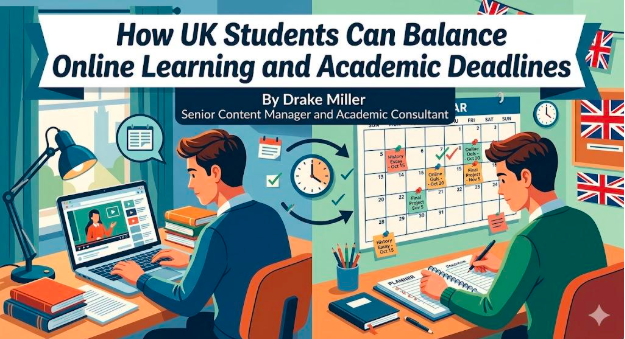
By Drake Miller – Senior Content Manager and Academic Consultant
The educational landscape in the United Kingdom has undergone a seismic shift over the last few years. In 2026, from the historic lecture halls of the Russell Group universities to the bustling digital classrooms of sixth-form colleges in Manchester and Birmingham, online learning is no longer a “backup plan”—it is the standard. However, as the digital-first model becomes permanent, students face a new era of academic pressure.
While digital education offers unparalleled flexibility, it brings a unique set of challenges. Without the physical structure of a campus, many UK students find themselves drowning in a sea of recorded lectures, digital handouts, and looming UCAS or university deadlines. Balancing the autonomy of online learning with the rigour of academic expectations requires more than just hard work; it requires a strategic, UK-centric approach to time management. Often, students seeking to navigate these complexities find that professional assignment help UK at Myassignmenthelp.com provides the necessary support to maintain high standards while managing a heavy digital workload.
In this guide, we explore how High School (Key Stage 4/5) and University students can master their schedules and excel in the digital age.
1. Create a “Digital Campus” at Home
One of the biggest hurdles for UK students is the blurring of lines between “home” and “study.” When your bedroom is your classroom, your brain struggles to switch into deep-work mode.
- Designate a Workspace: You don’t need a massive office. A dedicated desk or even a specific end of the dining table can work. The key is psychological association.
- Invest in Ergonomics: UK students often spend 8–10 hours a day on laptops. Ensure your screen is at eye level to avoid “tech neck,” a common complaint among A-Level and undergrad students.
- The Power of Routine: Dress as if you are going to college. It sounds simple, but the act of changing out of pyjamas signals to your brain that the “school day” has begun.
2. Master Your Deadlines: The “Backwards Mapping” Technique
Whether you are tackling a BTEC assignment, an A-Level essay, or a Master’s dissertation, the deadline is the finish line. The mistake most students make is starting from the beginning. Instead, try Backwards Mapping:
- Mark the Final Deadline: Put it in your digital calendar (Google Calendar or Outlook are standard in the UK).
- Set “Internal” Deadlines: Aim to finish your first draft at least 5 days before the official submission date. This accounts for technical glitches or last-minute Turnitin issues.
- Break it Down: A 3,000-word essay is intimidating. A 500-word introduction is manageable. Break your tasks into “micro-deadlines.”
For students struggling to meet these internal milestones, especially in language-heavy subjects, seeking professional guidance can be a lifesaver. Utilizing English assignment help provides expert support to help students understand complex briefs, refine their prose, and structure their work according to high UK academic standards.
See also: Improve Your Marketing 474951151 Digital Tools
3. Leverage the UK Academic Calendar
The UK academic system is unique, with specific pressure points like “Mock Week,” “Reading Week,” and the dreaded “January Exams.”
- The Reading Week Trap: Many UK university students view Reading Week as a holiday. In reality, this is the most critical time to catch up on online modules and get ahead on formative assessments.
- Exam Season Prep: Online learning allows for constant revision. Don’t wait until May to re-watch recorded lectures from October. Spend one hour every Saturday reviewing the week’s digital content.
4. Combat “Zoom Fatigue” with the Pomodoro Technique
Online learning often means staring at a screen for hours of synchronous or asynchronous content. This leads to cognitive overload. The Pomodoro Technique is highly effective for UK students:
- Study for 25 minutes (total focus).
- Break for 5 minutes (stand up, stretch, look away from the screen).
- After four cycles, take a 30-minute break.
This method ensures you remain productive without burning out before you’ve even reached your evening study session.
5. Utilize Digital Tools and UK Resources
The UK government and various educational bodies provide excellent digital resources. Don’t just rely on your internal VLE (Virtual Learning Environment) like Moodle or Blackboard.
- Seneca Learning: Excellent for High School and A-Level students to consolidate online lessons.
- Google Scholar: Essential for university-level research.
- Grammarly & Mendeley: Use these for proofreading and referencing (crucial for avoiding plagiarism, which UK institutions take very seriously).
6. The Importance of “Active” Online Learning
A common pitfall of online learning is “passive consumption”—watching a lecture like it’s a Netflix show. To balance your workload, you must be active:
- Take Hand-written Notes: Research suggests that writing by hand improves retention compared to typing.
- Participate in Forums: Most UK online courses have discussion boards. Engaging here helps clarify concepts early, saving you hours of confusion.
- Ask for Help Early: In a physical classroom, a teacher can see if you’re confused. Online, you are invisible unless you speak up. Use your tutor’s digital office hours.
7. Managing Mental Health and Isolation
Academic success in the UK is heavily linked to student wellbeing. Online learning can be isolating, especially during the dark winter months.
- The “Rule of Three”: Every day, try to achieve three things: one academic task, one physical activity (like a walk in the local park), and one social interaction (even if it’s a FaceTime call).
- The 15-Minute Sunlight Rule: UK weather is notoriously grey. Try to get outside for at least 15 minutes during daylight hours to keep your Vitamin D levels up, which is essential for concentration and mood.
8. Balancing Part-Time Work and Study
Many UK students work part-time in retail or hospitality to support their studies. Online learning provides the flexibility to work, but it can also lead to over-committing.
- Be Transparent: Tell your employer your exam and deadline dates as early as possible.
- The “Weekend Warrior” Myth: Don’t leave all your online modules for the weekend. Doing 30 minutes of study on a work day is more effective than an 8-hour marathon on Sunday.
9. When Deadlines Become Overwhelming
Despite the best planning, life happens. Illness, family emergencies, or simply a lack of understanding of a topic can lead to deadline panic. If you find yourself in this position:
- Check the Extenuating Circumstances Policy: Every UK university and college has one. If you have a valid reason, you may get a one-to-two-week extension.
- Seek Academic Assistance: If you are struggling to grasp the material, don’t suffer in silence. Utilizing reputable academic platforms can provide the clarity needed to finish an assignment on time. For many, MyAssignmentHelp serves as a bridge, offering expert assignment support to navigate the complexities of their curriculum and ensuring they submit high-quality work that meets strict UK marking criteria.
10. Conclusion: The Future is Hybrid
Online learning is an incredible tool that democratizes education. For UK students, the key to success lies in self-discipline, smart use of technology, and the courage to seek help when the workload scales up. By treating your online studies with the same respect as an in-person degree, and by utilizing the strategies mentioned above—from backwards mapping your deadlines to maintaining your mental health—you can turn the challenge of digital education into your greatest academic advantage.
Frequently Asked Questions
Q.1 How do I deal with technical issues during a deadline?
Always take screenshots of the error. Most UK universities require proof of a system failure if you are claiming “extenuating circumstances” for a late submission.
Q.2 Is online learning as respected as in-person degrees in the UK?
Absolutely. In 2026, employers value the self-discipline and digital literacy required to succeed in a hybrid or fully online environment.
Q.3 How can I stay motivated during long digital lectures?
Use the “Active Note-taking” method. Summarize each slide in your own words rather than transcribing the lecturer verbatim.
About the Author
Drake Miller is a Senior Content Manager and Academic Consultant with over a decade of experience in higher education strategy. He specializes in helping students navigate the intersection of technology and academic excellence through personalized content and authoritative educational guides.